



Is Robotic Knee Surgery Safe? Myths vs. Facts Explained by an Orthopedic Specialist
When patients are advised to undergo knee replacement surgery, their biggest concerns almost always center around safety: “Will the operation be painful?”, “What if something goes wrong?”, and, with the arrival of advanced technology, “Is robotic knee surgery actually safe?”
Because robotic joint replacement is still a relatively modern innovation in cities like Rajkot, it is natural for patients and their families to harbor doubts. Misconceptions about how robotic technology works often lead to unnecessary fear, causing people to delay needed treatment and live with severe pain longer than necessary.
To help clear the confusion, let us address the most common myths versus facts about robotic knee replacement safety, explained from a clinical perspective.
Fact Check: Debunking the Top 5 Myths About Robotic Knee Surgery
MYTH: "The robot operates automatically."
FACT: The surgeon retains 100% control at every second.

MYTH: "Robotics is an unproven experiment."
FACT: Backed by over a decade of global clinical trials.

MYTH: "Robotic surgery increases infection risk."
FACT: Minimizes tissue trauma, lowering complication risks.
Myth 1: “The robot performs the surgery on its own.”
-
The Reality: This is the single most common fear among patients. Many imagine a robotic arm operating autonomously without human intervention.
-
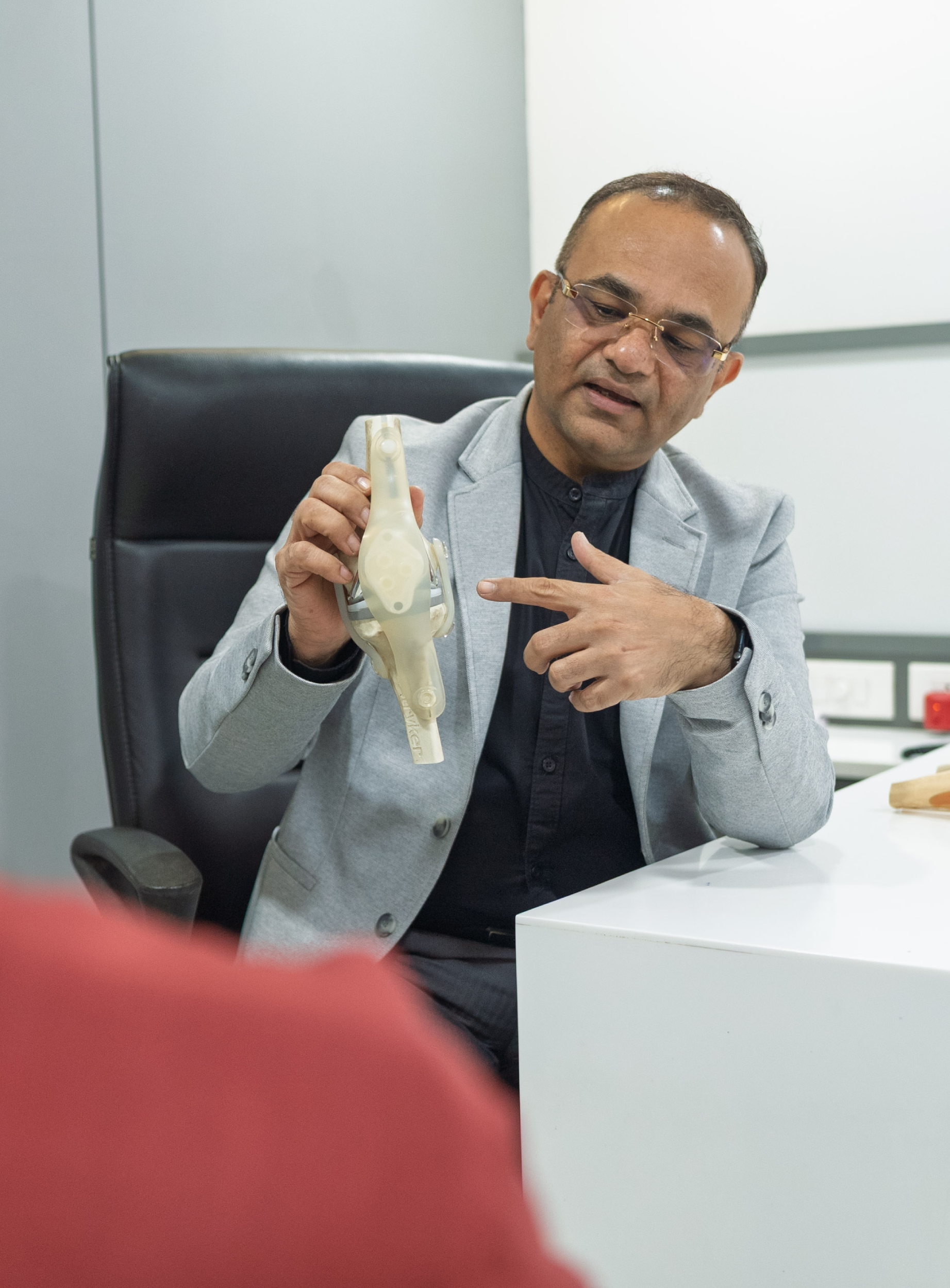
The Clinical Fact: The robot cannot move, make decisions, or cut tissue independently. It operates strictly as an intelligent navigation tool guided by the surgeon’s hands. At centers like Prabhukrupa Hospital in Rajkot, Dr. Ketan Shah holds and controls the robotic arm continuously. If the surgeon removes their hand or releases the control handle, the system stops instantly.
Myth 2: “Robotic technology is new and unproven.”
-
The Reality: Patients often worry that opting for robotic assistance means being a “guinea pig” for experimental medical tech.
-
The Clinical Fact: Systems like Mako SmartRobotics™ are backed by over 15 years of clinical research and more than 1,000,000 successful procedures performed worldwide. It is a FDA-cleared, globally established technology used in top orthopaedic centers across the US, Europe, Australia, and India.
Myth 3: “It is safer to rely only on an experienced human surgeon’s eye.”
-
The Reality: Many believe that adding a complex computerized machine increases the chance of technical glitches during surgery.
-
The Clinical Fact: Human expertise and robotic technology are not in competition—they work together. While an experienced surgeon brings decades of clinical judgment, the human eye cannot detect sub-millimeter variances under 1 mm. The robotic system introduces Haptic AccuStop™ technology, which creates a digital safety barrier around the surgical area. This prevents the cutting tool from straying outside the pre-planned boundaries, protecting healthy ligaments, nerves, and blood vessels from accidental manual slips.
Myth 4: “Robotic knee replacement carries a higher risk of infection or complications.”
-
The Reality: People assume more equipment in the operating theatre leads to greater exposure and infection risks.
-
The Clinical Fact: Robotic assistance actually lowers overall complication risks. Because bone cuts are sub-millimeter precise, there is less disruption to surrounding muscles, soft tissues, and blood vessels. Less tissue trauma translates to less post-operative bleeding, lower swelling, and a reduced risk of wound complications.
Myth 5: “Robotic surgery is only for young people, not elderly patients.”
-
The Reality: Families often hesitate to choose robotic surgery for seniors in their 70s or 80s, assuming it is too aggressive for fragile bodies.
-
The Clinical Fact: Elderly patients often benefit the most from robotic knee replacement. Because robotic surgery minimizes tissue damage and blood loss, post-operative pain is lower, allowing senior patients to stand and walk within 24 hours. This rapid recovery reduces risks associated with prolonged bed rest, such as deep vein thrombosis (DVT) or lung stiffness.
Safety Metrics: Traditional Manual vs. Robotic-Assisted Surgery
| Safety & Precision Parameter | Traditional Manual Knee Surgery | Mako SmartRobotics™ Knee Surgery |
| Pre-Operative Safety Blueprint | Based on standard 2D X-rays | CT-based 3D anatomical map customized to your joint |
| Accidental Soft Tissue Damage | Protected manually using steel retractors | Haptic boundary automatically freezes tool outside boundaries |
| Alignment Precision Margin | ~2° to 3° variance margin | Sub-millimeter (<1 mm / <1°) precision |
| Post-Op Pain & Tissue Trauma | Moderate to high due to muscle stretching | Significantly reduced due to tissue-sparing precision |
| Early Mobilization (Walking) | Usually Day 2 or 3 | Day 1 (Within 24 hours of surgery) |
Why Safety Depends on the Surgeon Behind the Technology
While robotic systems provide unparalleled safety boundaries, the surgical outcomes ultimately rest on the expertise of the doctor guiding the technology.
At Prabhukrupa Hospital in Rajkot, robotic knee procedures are personally planned, evaluated, and executed by Dr. Ketan Shah:
-
21+ Years of Specialized Arthroplasty Care: Saurashtra’s first DNB-credentialed exclusive joint replacement surgeon (since 2003).
-
Stryker National Faculty & Trainer: Serves as an official faculty mentor, training senior orthopedic surgeons in robotic joint replacement protocols.
-
Zero-Compromise Safety Standards: Operating in modern, ultra-clean modular laminar airflow operation theatres designed to minimize infection risks.
The Verdict: Is Robotic Knee Surgery Safe?
Yes. When performed by a qualified joint specialist, robotic-assisted knee replacement is not only exceptionally safe—it actively enhances patient safety by eliminating manual positioning errors and safeguarding surrounding soft tissues.
If chronic knee pain from severe arthritis is holding you back from enjoying life, you can explore robotic joint replacement with complete peace of mind.
Book a Safety & Suitability Evaluation in Rajkot
Visit Prabhukrupa Hospital to review your X-rays, discuss 3D robotic planning, and see if you are a candidate for robotic knee replacement.
-
Clinic Address: Prabhukrupa Hospital, Opposite Senior Citizen Park, Near Jubilee Garden, Kasturba Road, Rajkot – 360001.
-
Appointment Line: +91 9898 778 541
-
Official Website: drketanshahortho.com | prabhukrupahospital.com