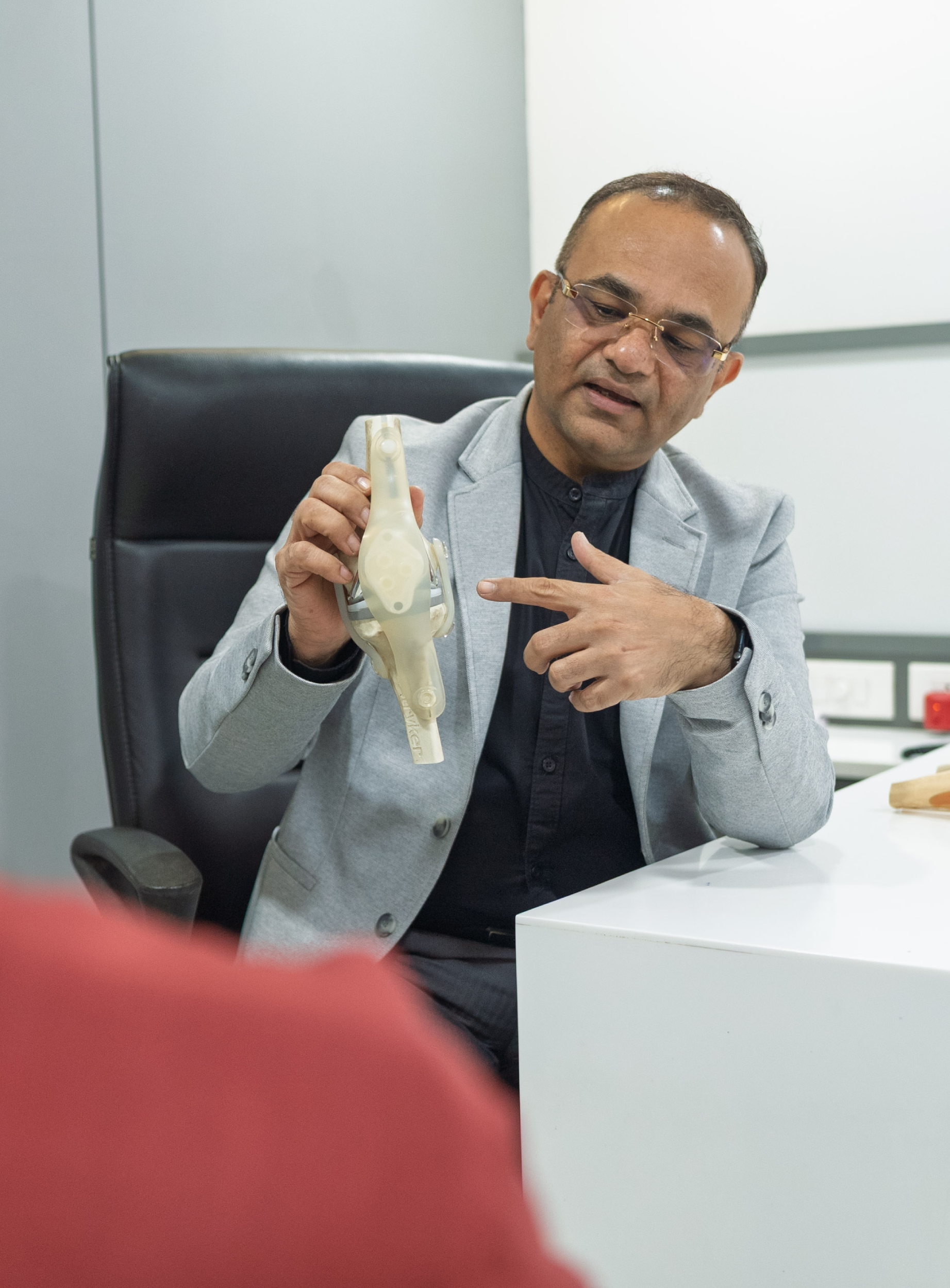




Hip pain is uniquely frustrating because it affects almost every movement your body makes. Whether you are taking a stroll, sitting at your office desk, getting into a car, or simply trying to sleep on your side, severe hip discomfort can quickly drain your energy and limit your independence.
Many patients across Rajkot and Saurashtra initially mistake hip problems for lower back pain, sciatica, or routine muscle strain. However, when hip pain becomes a constant companion—especially during basic activities like walking or sitting—it usually signals an underlying issue within the hip joint itself.
If you or a family member are living with persistent hip discomfort, here is a complete guide to understanding the root causes, how specialists diagnose the problem, and the modern treatments available to restore pain-free movement.
Why Hip Pain Happens During Walking vs. Sitting
The location and timing of your hip pain provide vital clues about what is happening inside the joint:
[ Pain While Walking / Weight-Bearing ] ➔ Direct friction on joint cartilage or bone-on-bone contact.
                                                    ↓
[ Pain While Sitting / Bending ]        ➔ Impingement, bursitis, or deep cartilage/labral damage.
                                                    ↓
[ Pain Radiating to Groin ]             ➔ True hip joint pathology (Osteoarthritis, AVN).
-
Pain While Walking: Your hip joint bears 3 to 5 times your total body weight with each step. Pain while walking or standing usually indicates that the protective cartilage cushioning the ball-and-socket joint has worn thin, causing bone-on-bone friction.
-
Pain While Sitting or Bending: Sitting at a 90-degree angle compresses the front of the hip joint. Pain in this position often points to hip impingement, inflammation of the fluid-filled sacs (bursitis), or advanced structural damage.
-
The “Groin Sign”: A key clinical detail most patients miss is that true hip joint pain is almost always felt in the groin or front of the upper thigh, rather than high up on the outer buttock or lower back.
4 Common Causes of Severe Hip Pain
Understanding the root cause of your hip pain is the first step toward getting the right treatment. Here are the four primary medical conditions responsible for severe hip discomfort:
1. Avascular Necrosis (AVN) of the Femoral Head
-
What It Is: A condition where blood supply to the ball of the hip joint (femoral head) is reduced or cut off. Without blood flow, the bone tissue gradually weakens and collapses.
-
Who It Affects: Very common in India among young to middle-aged adults (ages 25 to 55), often triggered by past trauma, steroid exposure, or post-viral complications.
-
Key Symptoms: Sharp, deep groin pain that worsens when bearing weight or rotating the leg.
2. Hip Osteoarthritis (Wear-and-Tear Arthritis)
-
What It Is: Progressive breakdown of the smooth articular cartilage lining the hip socket and ball over time.
-
Who It Affects: Typically affects adults aged 50 and above.
-
Key Symptoms: Morning stiffness in the hip, a grinding sensation when walking, difficulty tying shoelaces or putting on socks, and a noticeable limp.
3. Femoroacetabular Impingement (FAI) & Labral Tears
-
What It Is: An anatomical misalignment where extra bone grows along the hip ball or socket, causing them to rub unnaturally against each other during movement and tearing the surrounding cartilage ring (labrum).
-
Who It Affects: Active individuals and young adults.
-
Key Symptoms: Catching or clicking sensations in the hip, along with sharp pain when sitting for long periods or squatting.
4. Trochanteric Bursitis & Tendinopathy
-
What It Is: Inflammation of the fluid-filled bursa sacs or tendons located on the outer point of the hip bone.
-
Who It Affects: People of all ages, often caused by repetitive strain or joint imbalance.
-
Key Symptoms: Tenderness on the outer side of the hip, making it difficult to sleep on that side at night.
How Hip Conditions Are Diagnosed
Self-diagnosing hip pain can lead to delayed care or wrong treatments. A specialist uses a systematic diagnostic process to pin down the exact cause:
| Diagnostic Tool | What It Reveals | Clinical Purpose |
| Physical Gait & Mobility Test | Range of motion, leg length equality, and impingement signs | Evaluates how the joint functions in real time |
| Weight-Bearing Digital X-Rays | Joint space narrowing, bone spurs, and structural deformities | Primary tool for diagnosing osteoarthritis |
| High-Resolution MRI Scan | Early-stage AVN, bone marrow edema, labral tears, and cartilage damage | Essential for catching AVN before bone collapse occurs |
| CT-Based 3D Mapping | Precise 3D reconstruction of the pelvic socket and femoral ball | Used for pre-operative robotic surgical planning |
Modern Treatment Solutions: From Conservative Care to Advanced Surgery
Treatment depends entirely on the stage and cause of your hip condition:
Non-Surgical Management (Early Stages)
For early-stage bursitis, mild arthritis, or Stage 1 AVN, conservative measures can help manage symptoms:
-
Targeted Physical Therapy: Strengthening core, gluteal, and hip-stabilizing muscles to reduce joint strain.
-
Activity Modification: Switching from high-impact activities (running, jumping) to low-impact movements (swimming, stationary cycling).
-
Medication & Core Decompression: Medications or minor core decompression procedures to preserve bone in early-stage AVN.
Surgical Solutions: Modern Robotic Total Hip Replacement (Advanced Stages)
When cartilage loss is severe, or when AVN causes the femoral head to collapse, non-surgical methods no longer provide lasting relief. In these cases, Total Hip Replacement (Arthroplasty) is the gold-standard solution.
Today, advanced Mako SmartRobotics™ technology in Rajkot has made hip replacement safer, more accurate, and longer-lasting than ever before:
[ Pre-Op 3D CT Scan ] ➔ Custom 3D map of pelvic socket & leg length
                                 ↓
[ Robotic Cup Alignment ] ➔ Sub-millimeter accuracy prevents dislocation & leg imbalance
                                 ↓
[ Rapid Recovery Protocol ] ➔ Walk with support within 24 hours; home in 2-3 days
-
Zero Leg Length Discrepancy: 3D digital planning ensures the artificial joint matches your exact leg height, preventing post-op limping.
-
Dislocation Prevention: Robotic alignment places the socket cup in an optimal “safe zone” tailored to your pelvis.
-
20 to 25+ Year Lifespan: Evenly distributed mechanical forces protect modern ceramic-on-polyethylene bearings from premature wear.
Expert Hip Care in Rajkot: Dr. Ketan Shah
Evaluating severe hip pain requires senior diagnostic judgment and specialized arthroplasty expertise. At Prabhukrupa Hospital in Rajkot, hip care is led by Dr. Ketan Shah:
-
21+ Years of Super-Specialized Practice: Saurashtra’s first DNB-credentialed exclusive joint replacement surgeon (since 2003).
-
Mastery in AVN & Complex Hip Procedures: Hundreds of successful primary, complex AVN, and revision hip surgeries performed.
-
Robotic Leadership: Bringing international-standard Mako SmartRobotics™ hip technology directly to patients across Rajkot and Saurashtra.
-
Stryker National Faculty & Mentor: Teaching and training orthopaedic specialists across India in advanced joint replacement techniques.
Take the First Step Toward Walking Without Pain
Persistent hip pain should not dictate your daily schedule or force you to give up the activities you love. Getting an accurate diagnostic evaluation early can protect your joint health and give you back your active lifestyle.
Visit Prabhukrupa Hospital in Rajkot for an expert hip assessment and personalized treatment plan.
Book Your Hip Consultation
-
Hospital Location: Prabhukrupa Hospital, Opposite Senior Citizen Park, Near Jubilee Garden, Kasturba Road, Rajkot – 360001.
-
Appointment Helpline: +91 9898 778 541
-
Official Website: drketanshahortho.com | prabhukrupahospital.com